

Prior Authorization Workflow Failures: What Medical Practices Should Track Before the Claim
Home /
Credentialing Solutions for Medical Practices: How They Streamline Provider Enrollment in Dallas
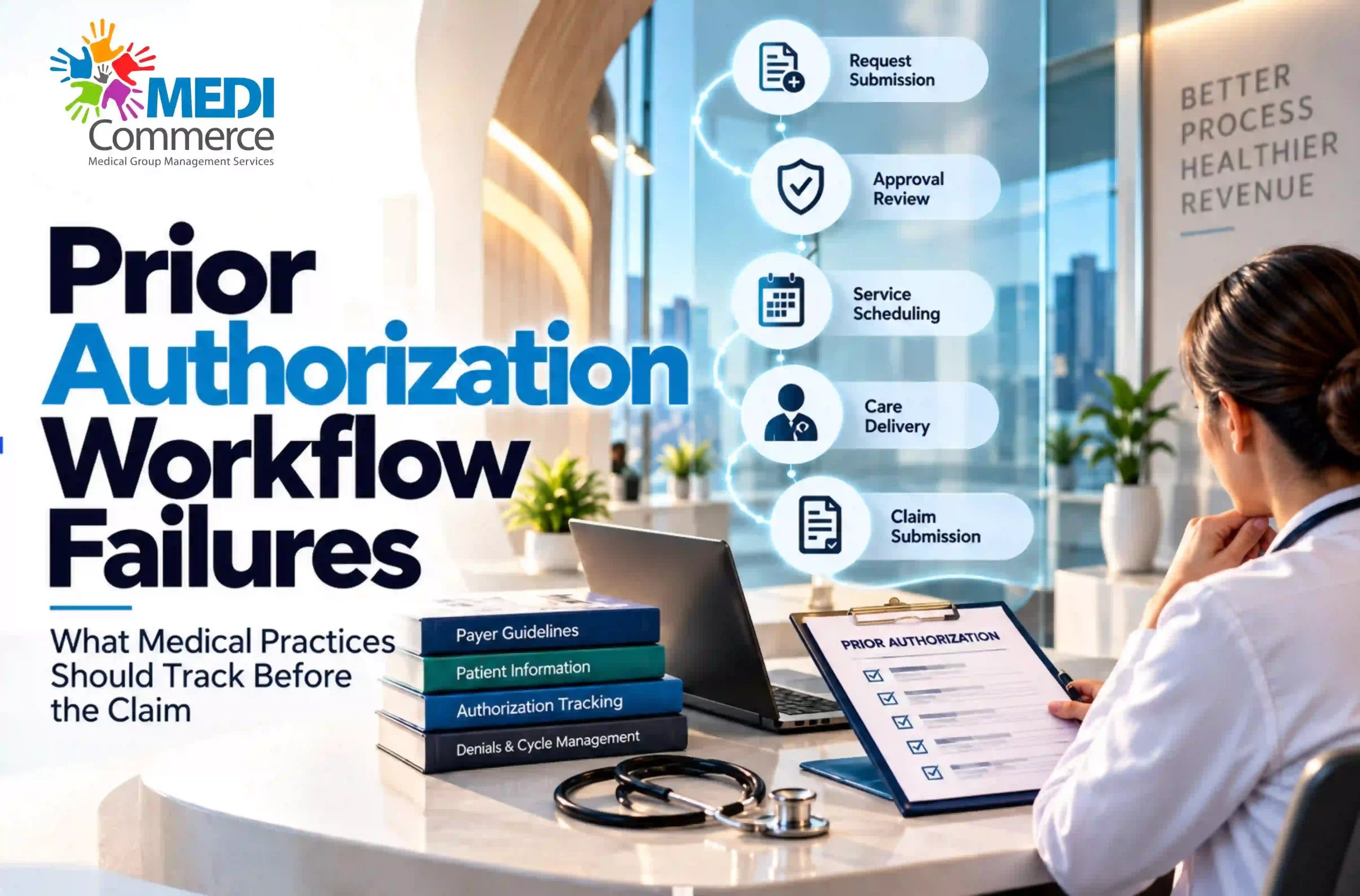
For physician groups, hospitals, and healthcare financial leaders, Prior Authorization Management is an upstream revenue-cycle control. A gap in patient information or an authorization that does not match the care delivered can create rework and a denied claim later. Effective Prior Authorization Management connects payer requirements with scheduling, care delivery, documentation, and billing.
Authorization is not a guarantee of payment. Practices need to confirm that approval applies to the service delivered, keep a clear record, and use denial patterns to prevent repeat problems.
Check that the approval matches the service
A strong Prior Authorization Management process confirms the approved service, date range, provider or location conditions, number of visits or units, and any additional payer requirements.
These details can change after approval. A procedure may be rescheduled, a provider or location may change, or a patient may need more visits than originally approved. A prior authorization workflow should flag those changes for review before the service is delivered or the claim is submitted.
For example, if a patient uses all eight approved therapy sessions but needs more, the practice should confirm whether an extension or new approval is required before scheduling additional visits.
Find workflow gaps before the claim
Prior Authorization Management should connect authorization records with scheduling and billing so teams can check:
- Whether the service date falls within the approved period
- Whether the approved service matches the service delivered
- Whether enough visits or units remain
- Whether provider or location conditions are met
- Whether a schedule or treatment-plan change requires a new review
- Whether the claim reflects the authorized service
Payer requirements vary by plan and service. Authorization-related claim denials should be reviewed by payer and service line to find where the mismatch began.
Use denial patterns to prevent repeat problems
When prior authorization denials recur, leaders should look beyond the individual claim. Identify the most frequent reasons by the payer and trace them to the workflow step where they started. The cause may be incomplete information at intake, a missed schedule change, an exhausted unit limit, or payer-specific documentation requirements.
Then assign an owner to the corrective action and check whether the same denial pattern declines. HFMA’s revenue-cycle guidance highlights this upstream approach: use denial information to improve the processes that create claim risk, rather than relying only on downstream appeals. HFMA
Keep records and monitor performance
Reliable Prior Authorization Management depends on a record of the request, supporting documents, submission and decision dates, payer communications, approval conditions, changes, and follow-up actions. This helps teams determine whether an authorization was missing, expired, or did not cover the care ultimately delivered.
Monitor request turnaround time, pending requests, denial and mismatch rates, expired or exhausted approvals, incomplete submissions, staff rework, and delays related to unresolved cases. Prior authorization tracking should help identify repeat causes across payers, specialties, services, and locations.
Understand CMS requirements
CMS-0057-F sets requirements for certain impacted payers. For applicable payers and medical items and services, excluding drugs, standard decisions are generally due within seven calendar days and expedited decisions within 72 hours. Beginning in 2026, applicable impacted payers must provide a specific reason for denials. These requirements do not mean every commercial payer follows the same timelines or that authorization guarantees payment. CMS also published a proposed rule in April 2026 addressing prior authorization for drugs; its provisions remain proposed unless finalized. www.cms.gov
Prior Authorization Management should include recording submission and decision dates, retaining payer responses, and having a process to follow up on pending requests and denials.
Maintain clear ownership and follow-up
Prior Authorization Management requires clear responsibilities across scheduling, authorization, clinical, and billing teams. Assigned staff should review pending requests, approaching expiration dates, remaining units, and changes to scheduled services.
Each unresolved case should have a responsible team member, a documented follow-up action, and an escalation route. Before claim submission, staff should compare the approval with the service delivered and resolve discrepancies.
How MediCommerce can support practices
MediCommerce lists benefits verification, prior authorization, scheduling, medical coding and billing, accounts receivable, and credentialing among its services for healthcare organizations. Depending on the practice’s needs and agreed scope, these services may support different stages of medical billing and revenue cycle management.
Its Benefits verification and prior authorization services may be relevant to practices reviewing authorization processes alongside broader revenue-cycle operations. Visit MediCommerce to learn more.
Frequently Asked Questions
1. What should medical practices track in a prior authorization workflow?
Medical practices should track authorization status, submission and decision dates, approval reference numbers, authorized services, validity periods, visit or unit limits, payer requirements, and follow-up actions. These records help identify authorization gaps before claim submission.
2. What are the most common prior authorization workflow failures in medical billing?
Common failures include incomplete authorization requests, expired approvals, exhausted visit limits, mismatches between approved and delivered services, provider or location changes, and missing documentation. These issues can lead to claim denials, payment delays, and additional administrative work.
3. How can medical practices prevent prior authorization-related claim denials?
Medical practices can reduce authorization-related denials by verifying approval conditions before services are delivered, monitoring expiration dates and remaining units, documenting schedule changes, and comparing authorization records with the final claim. Regular denial analysis also helps prevent recurring workflow errors.
4. How does prior authorization management improve revenue cycle management?
Prior Authorization Management supports revenue cycle management by identifying coverage and approval gaps before claims are submitted. It helps reduce avoidable rework, improve coordination between clinical and billing teams, monitor denial trends, and support more efficient claims processing.
5. How can healthcare providers improve prior authorization tracking and follow-up?
Healthcare providers can improve tracking by maintaining centralized authorization records, assigning responsibility for pending requests, setting alerts for expiring approvals, documenting payer communications, and establishing escalation procedures for unresolved cases. Reviewing turnaround times and denial patterns helps identify opportunities for improvement.
What should practices track for prior authorization in medical billing?
Track request status, submission and decision dates, reference numbers, approved services, applicable dates and limits, supporting documents, schedule changes, and follow-up actions.
MediCommerce
5301 Alpha Road, Suite 80 – 716
Dallas, TX 75240
Phone: (469) 252-4795
Legal Disclaimer
This article is for informational and educational purposes only and does not constitute medical, legal, financial, or billing advice. Medical coding, documentation, medical necessity, and reimbursement requirements vary by payer, plan, service, and applicable guidelines. The information provided does not guarantee claim approval, reimbursement, or compliance. References to CMS, NCCI, and other organizations are for informational purposes only and do not imply endorsement or affiliation with MediCommerce LLC. Healthcare organizations should verify current requirements with applicable payers and official sources and consult qualified professionals regarding their specific circumstances. MediCommerce services and outcomes may vary based on individual organizational needs and agreed service scope.
© 2026 MediCommerce LLC. All rights reserved. MediCommerce LLC, 5301 Alpha Road, Suite 80-716, Dallas, TX 75240.